War is Tragic
Why This Moment Requires Clarity

War is tragic. Peace is the goal. But clarity requires remembering how we got here.
“A season is set for everything, a time for every experience under heaven:
A time for birthing and a time for dying,
A time for planting and a time for uprooting the planted;A time for slaying and a time for healing,
A time for tearing down and a time for building up;A time for weeping and a time for laughing,
A time for wailing and a time for dancing;A time for throwing stones and a time for gathering stones,
A time for embracing and a time for shunning embraces;A time for seeking and a time for losing,
A time for keeping and a time for discarding;A time for ripping and a time for sewing,
A time for silence and a time for speaking;A time for loving and a time for hating;
A time for war and a time for peace.”–Kohelet 3:1-8
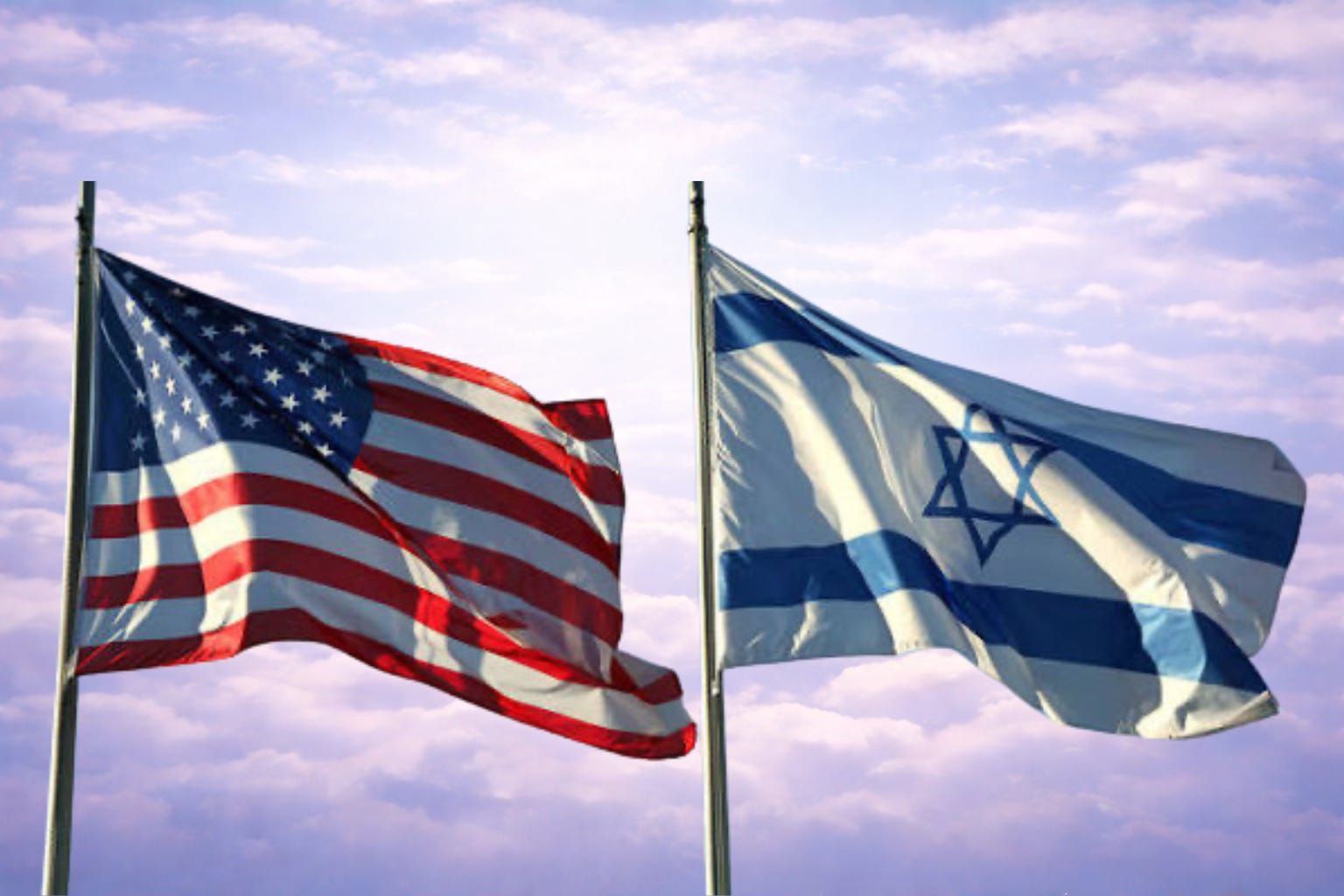
Military action carries risk — for civilians, for brave American service members and IDF soldiers, and for innocent families across Iran, Israel, and the region. I pray for their safety. The Iranian people are not the IRGC — they are its primary victims.
If there were a path to lasting peace without force, I would choose it. But hoping a regime that has repeatedly stated and demonstrated its violent intent will suddenly abandon that nature does not disarm it.
I hold two truths at once: war is tragic, and sometimes, like now, war is necessary.
For 47 years, the regime in Tehran has openly and explicitly defined itself through an ideology and governing doctrine that centers on avowed hostility toward the United States, Israel, and the broader Western democratic order.
The 1979 embassy seizure and hostage crisis was the opening chapter. Since then, through the Islamic Revolutionary Guard Corps and its web of proxy militias, Iran has exported violence while maintaining deniability — by design.
Americans have died because of that strategy. Among them: U.S. Marines in Beirut. Airmen at Khobar Towers. Soldiers targeted by Iranian-backed militias in Iraq. Three U.S. troops killed in Jordan in 2024 by a proxy drone. In 2020, Iran itself launched ballistic missiles at U.S. bases in Iraq, leaving over a hundred Americans with traumatic brain injuries.
Over the course of these 47 years, the IRGC and its proxies have carried out several hundreds of attacks across the region — not only against the United States and Israel, but against Arab governments, shipping lanes, embassies, and civilians. These were deliberate acts by a regime that calculates aggression carefully and hides behind intermediaries when it can.
Decades of restraint and diplomacy did not end that pattern. Too often, those efforts gave the IRGC time to evolve and escalate its hostile agenda. A response is not the beginning of a conflict when the conflict never stopped.
Israel has absorbed wave after wave of rockets, drones, and missile threats from networks funded and armed by Tehran. Israel sits at the geographic front line — but the United States has long faced the same Iranian-backed proxy aggression. Democratic allies working together is not charity — it is strategic alignment against a shared threat.
And the cost of that hostility has never been confined to the battlefield. It has been measured in U.S. taxpayer dollars, in defense spending, and in economic volatility that Americans feel at home. Every time Iran or its proxies escalate — anywhere — threatening the Strait of Hormuz, attacking shipping lanes in the Red Sea, striking U.S. bases, or forcing military surges to protect regional assets — the United States pays to respond. Carrier groups deploy. Missile defense systems activate. Insurance rates for global shipping spike. Oil markets react. Energy prices fluctuate. Supply chains absorb new shocks. Proxy warfare is designed to impose slow, accumulating costs without triggering full-scale war.
This is not about seizing resources or “fighting for oil.” The goal isn’t control — it’s preventing coercion and stopping a regime from weaponizing geography to destabilize global markets and extract leverage through chaos.
Americans have already been paying — in blood and in billions — because Iran’s campaign directly targets U.S. interests. The slogan that Americans are “dying for Israel” ignores that reality. Acting alongside Israel is not a diversion from American interests. It is part of defending them. Israel has absorbed the brunt of Iran’s proxy aggression for decades, often serving as the first line of defense against forces that ultimately threaten broader Western interests.
This conflict does not exist in isolation.
Iran has increasingly aligned with other authoritarian powers. It has supplied Russia with drone technology used against Ukraine. It benefits from Chinese economic lifelines that bypass sanctions and provide strategic oxygen. North Korea and Iran have long cooperated on missile development. This may not be a formal alliance, but it is a mutually reinforcing system designed to challenge American power and normalize sustained pressure against democratic societies.
Geography and trade routes are central to this dynamic.
Iran borders the Strait of Hormuz, through which roughly a fifth of the world’s oil flows. Any instability there reverberates globally. China depends heavily on imported energy — much of it passing through that corridor. Russia benefits when energy markets spike and Western economies feel inflationary pressure. Allowing Iran to weaponize strategic waterways increases the leverage of bad-actor states that benefit from such global instability.
And within the Middle East itself, this is not simply a U.S.–Israel–Iran triangle. Iran is a Persian nation whose current leadership operates a Shia Islamist theocracy in a region largely dominated by Sunni Arab states. That sectarian divide is not trivial. Tehran has funded and directed militias not only against Israel, but within Arab countries — destabilizing Iraq, fueling conflict in Syria, arming Hezbollah in Lebanon, backing the Houthis in Yemen who threaten Gulf shipping. Many Sunni Arab governments view Iran’s expansionism as a direct threat to their own sovereignty. This ideology did not arise as a reaction to one alliance. It is embedded in the regime’s founding documents and central to its rule.
I continue to pray for our service members — U.S. and IDF — and for every innocent civilian. But I also acknowledge the sobering reality that diplomacy with this regime has repeatedly been met with delay tactics, proxy escalation, continued ideological hostility, and advancing nuclear capabilities. Negotiations have too often bought the IRGC time — for missile refinement, proxy strengthening, and deeper integration with Moscow and Beijing.
There are moments in history when avoiding confrontation does not prevent war — it merely postpones it under worse conditions.
I stand with the Iranian people. For decades, they have protested at enormous personal risk. They have been jailed, beaten, silenced, and killed for demanding basic freedoms. And in January 2026, reports about the regime’s crackdown ranged — with some accounts suggesting the death toll could have exceeded 30,000 — while independent verification was made harder by censorship and internet shutdowns. The exact number matters, but the reality behind all of them is the same: dissent is met with brutality, and the Iranian people are treated as disposable.
They are not their regime. They are heirs to a civilization far older than the current theocracy, and far richer than the ideology imposed upon them in 1979. After 47 years of oppression, they deserve the possibility of restored freedom and democratic governance.
The current regime has violently foreclosed the possibility of reform. Whatever political future emerges must ultimately be shaped by Iranians themselves.
I support Operation Epic Fury.
I support Operation Lion’s Roar.
I support the United States and Israel acting together in pursuit of regional stability and deterrence.
My hope — my prayer — is that this time of war is undertaken so that an enduring time of peace can truly follow.
I look forward to the day promised in Isaiah 2:4:
“Thus [God] will judge among the nations
And arbitrate for the many peoples,
And they shall beat their swords into plowshares
And their spears into pruning hooks:
Nation shall not take up
Sword against nation;
They shall never again know war.”